
A slewing bearing almost never fails because the steel was wrong. It fails because five numbers were never written down at the enquiry stage — and the supplier quietly filled the gaps with defaults.
If you are sourcing a slewing ring bearing for a crane, excavator, welding positioner, aerial platform or solar tracker, these are the five items to lock before you approve a drawing. They are also the five items most buyers leave out.
1. The load case, not the load
“Ten-ton crane” is not a specification. A slewing bearing carries axial load, radial load and tilting moment at the same time, and the tilting moment is usually the one that sizes the bearing — because it is force multiplied by distance from the rotation axis.
A 3-ton load hanging 1.2 m off centre produces a 36 kN·m moment. Move that load to 2 m and the same crane produces 60 kN·m. Same machine, same tonnage, different bearing.
Before you send an enquiry, state:
- ● peak and continuous axial, radial and moment values
- ● the moment arm, or the load’s position relative to the rotation axis
- ● whether the load is steady, shock-loaded, or reversing
- ● duty cycle: cycles per hour and hours per day
If you cannot calculate the moment, ask the supplier to do it for you — a real manufacturer will, and how they respond tells you a great deal about who you are buying from.
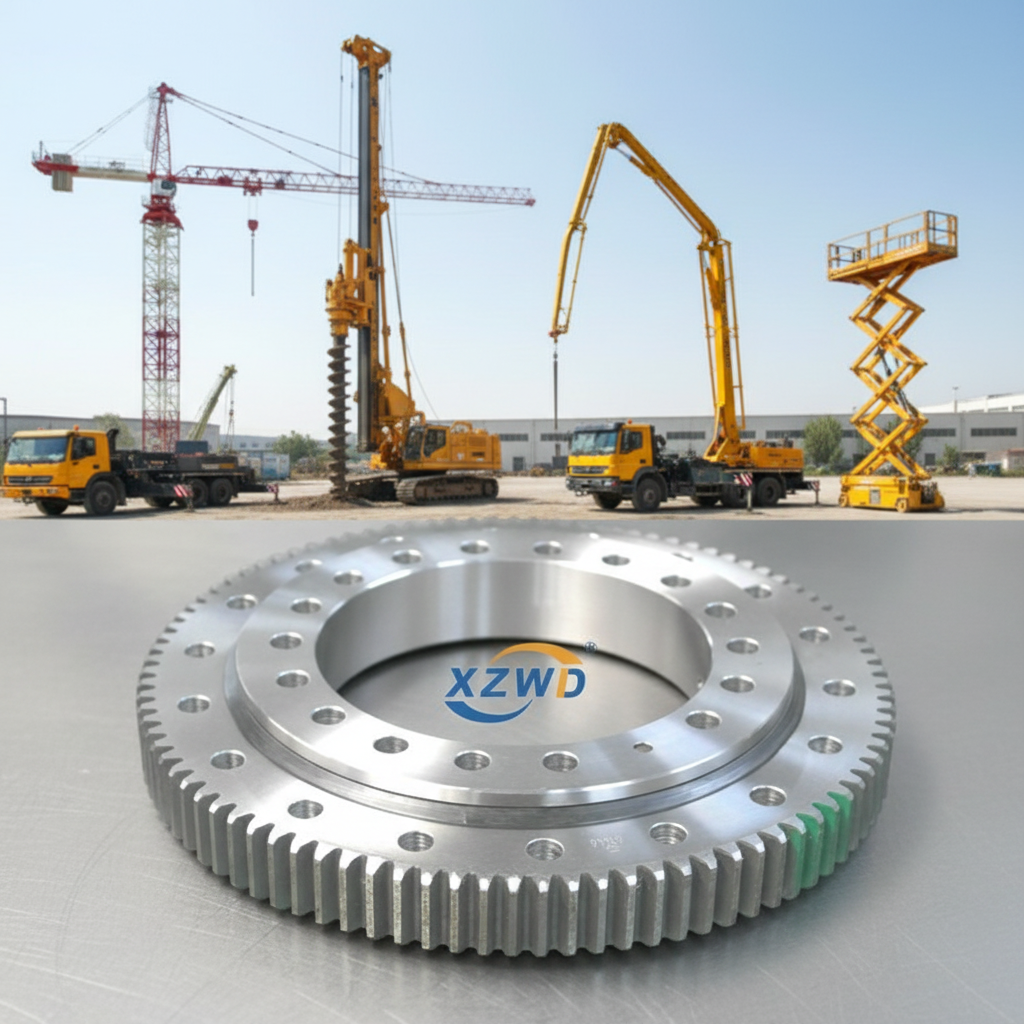
2. The mounting flange is part of the bearing
This is the most expensive omission in the list. A slewing ring is not a self-supporting bearing that you bolt onto any flat plate. It relies on a stiff, flat, well-supported structure. If the flange deflects under load, the raceway deforms with it, the load concentrates on a few rolling elements, and the bearing dies long before its rated life.
So the specification must include, on both the bearing and the mating structure:
- ● flatness and surface finish of the mounting faces
- ● bolt grade, preload and tightening sequence
- ● wall thickness and rib layout of the supporting frame
- ● whether the structure is welded and stress-relieved, or raw weldment
Weld a bearing onto an unstressed frame and it will bind within a season. This is not a bearing defect, but it is almost always reported as one.
3. Gear data — including the pinion you forgot
If you need a geared slewing bearing, the bearing and the pinion are a matched pair. Buyers routinely specify the bearing and forget that the pinion has to match module, pressure angle, tooth count and centre distance.
Decide up front:
- ● external gear or internal gear — external is easier to service, internal keeps the drive inside the envelope
- ● gear module and number of teeth
- ● required centre distance to your existing drive
- ● tooth hardness, and whether the pinion is hardened to match
A bearing with the right load rating and the wrong module is scrap. Send the pinion drawing with the enquiry, every time.
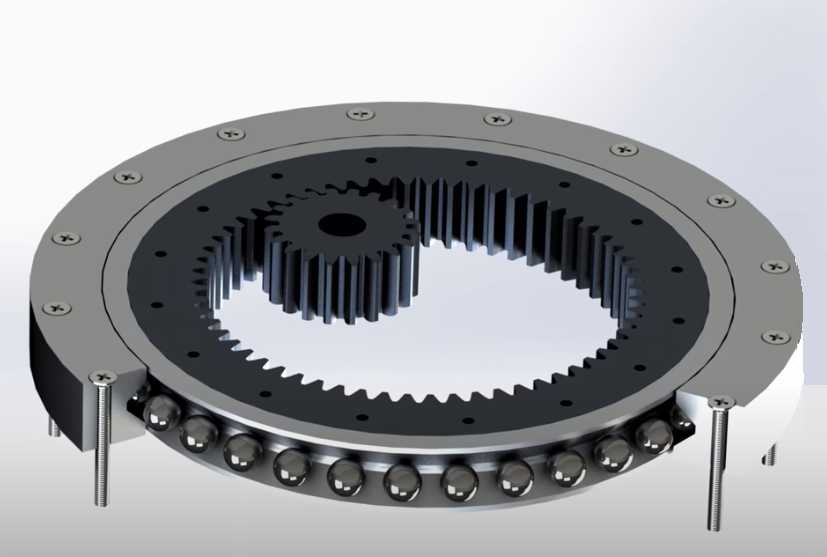
4. Clearance class and backlash
Catalogue bearings ship with standard clearance. Machines that need positioning accuracy, or that reverse direction frequently, need reduced or small clearance — and that must be specified, not assumed.
The mistake runs the other way too. Buyers ask for “zero backlash” on a large welded fabrication, then find the bearing binds the moment the frame heat-distorts. If the structure moves, the clearance has to absorb it. Ask your supplier what clearance they recommend for your frame, and get the number in writing.
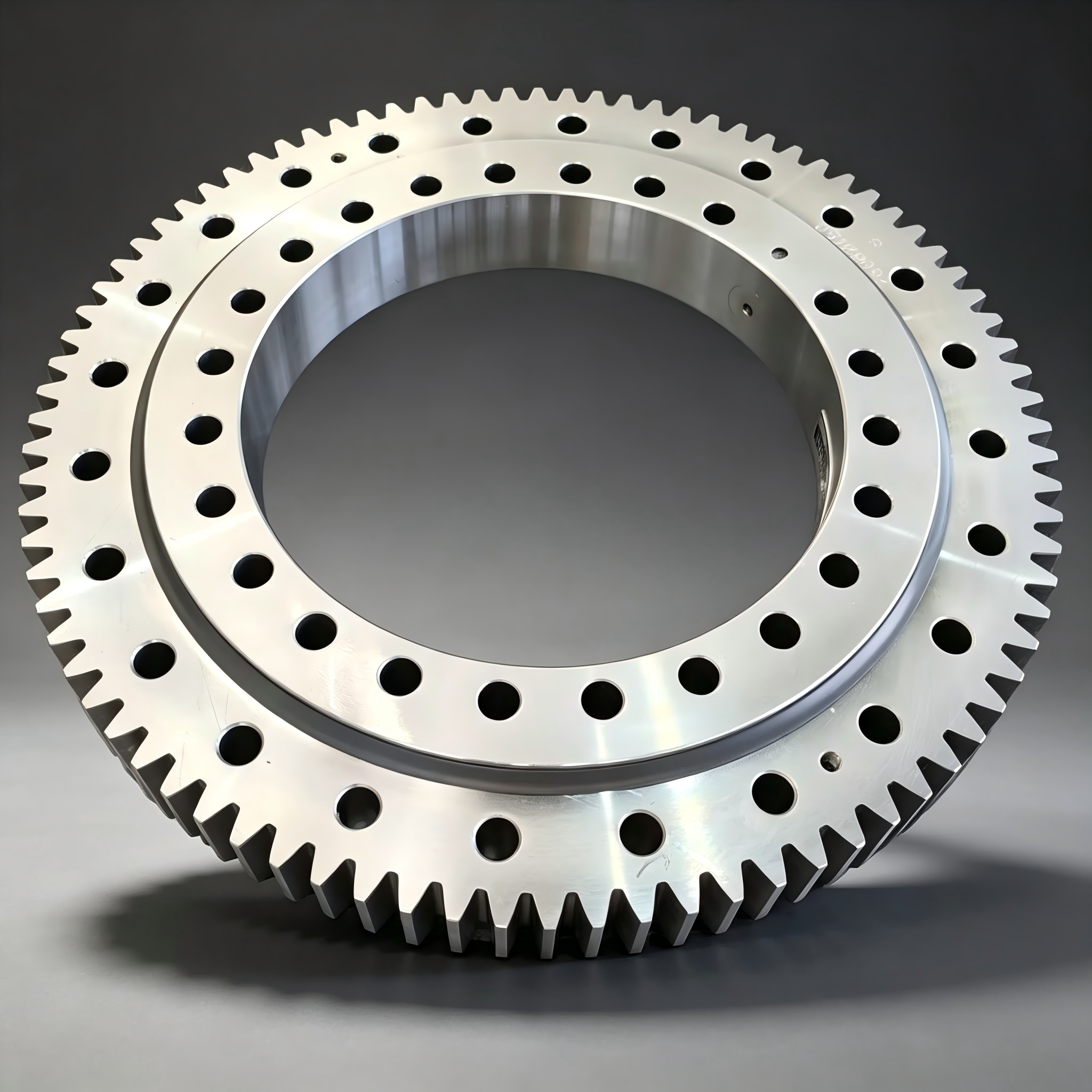
5. Sealing and the relubrication route
Two items nobody thinks about until commissioning day:
Sealing.
- ● Single seal, double seal, or sealed-for-life. Washdown, dust, slurry and coastal humidity each need a different answer.
Grease point placement.
- ● The nipple must be reachable after the machine is assembled. On a crane or an excavator, a grease point on the wrong face of the ring is a maintenance problem for the next decade.
Also agree the relubrication interval and grease type in the quotation. Mixed greases are a common cause of early raceway damage.
Send us your drawing, your working condition, or a photo of the machine you’re fixing. With 15+ years of slewing bearing manufacturing behind us, our engineers reply with a practical answer.
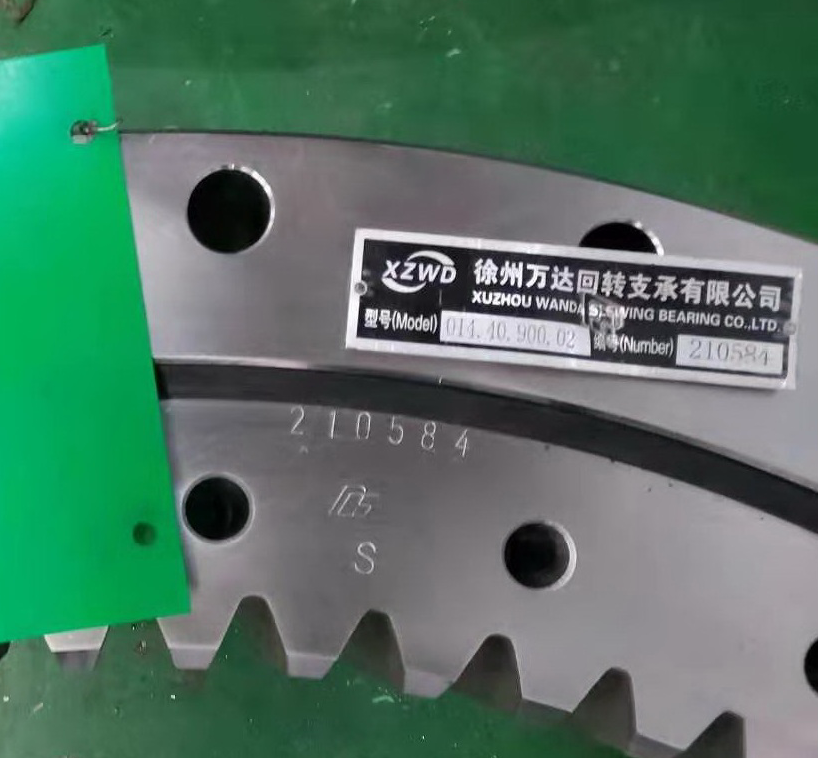
How to read a slewing bearing part number
Most slewing bearing designations use three blocks: construction and gear code · rolling element diameter · raceway centre diameter.
Take 011.20.200 — series 011, a 20 mm ball, on a 200 mm raceway centre diameter.
The middle number matters more than buyers expect. A 20 mm ball and a 25 mm ball on the same raceway diameter are not interchangeable, and the price difference is not a discount — it is less bearing.
One warning: the first block is manufacturer-specific. Two suppliers can use 011 for different constructions. Always confirm the code against the supplier’s own chart rather than assuming, and check the mounting hole pattern and track diameter before approving a substitute.
FAQ
Can I replace one brand’s slewing bearing with another? Often yes, if series, rolling element diameter, raceway centre diameter and the mounting hole pattern all match. Verify the clearance class too — two bearings that fit identically can behave very differently on a reversing application.
Do I need the tilting moment if I already know the axial load? Yes. Axial load alone cannot size a slewing ring. The moment, and where it acts, is usually the deciding figure.
What should I send with an RFQ to get an accurate price? Load case with moment arm, mounting drawing with bolt pattern and flange thickness, gear data plus pinion drawing, clearance class, sealing requirement, and target quantity per year. That package gets you a real price instead of a placeholder.
Xuzhou Wanda Slewing Bearing Co., Ltd. manufactures slewing bearings from 200 mm to 6,000 mm raceway diameter — single-row four-point contact ball, crossed roller, double-row and three-row roller designs, in external gear, internal gear and ungeared versions. Send us your load case and mounting drawing and we will size it for you.
Post time: Oct-23-2026