
The steel used in the production of slewing bearings is mainly divided into four types: 50Mn, 42CrMo, 20CrMnTi, and GCr15SiMn. To analyze the wear resistance of slewing bearing teeth, it is necessary to combine material characteristics, heat treatment processes, and application scenarios. The following is a summary based on relevant information:
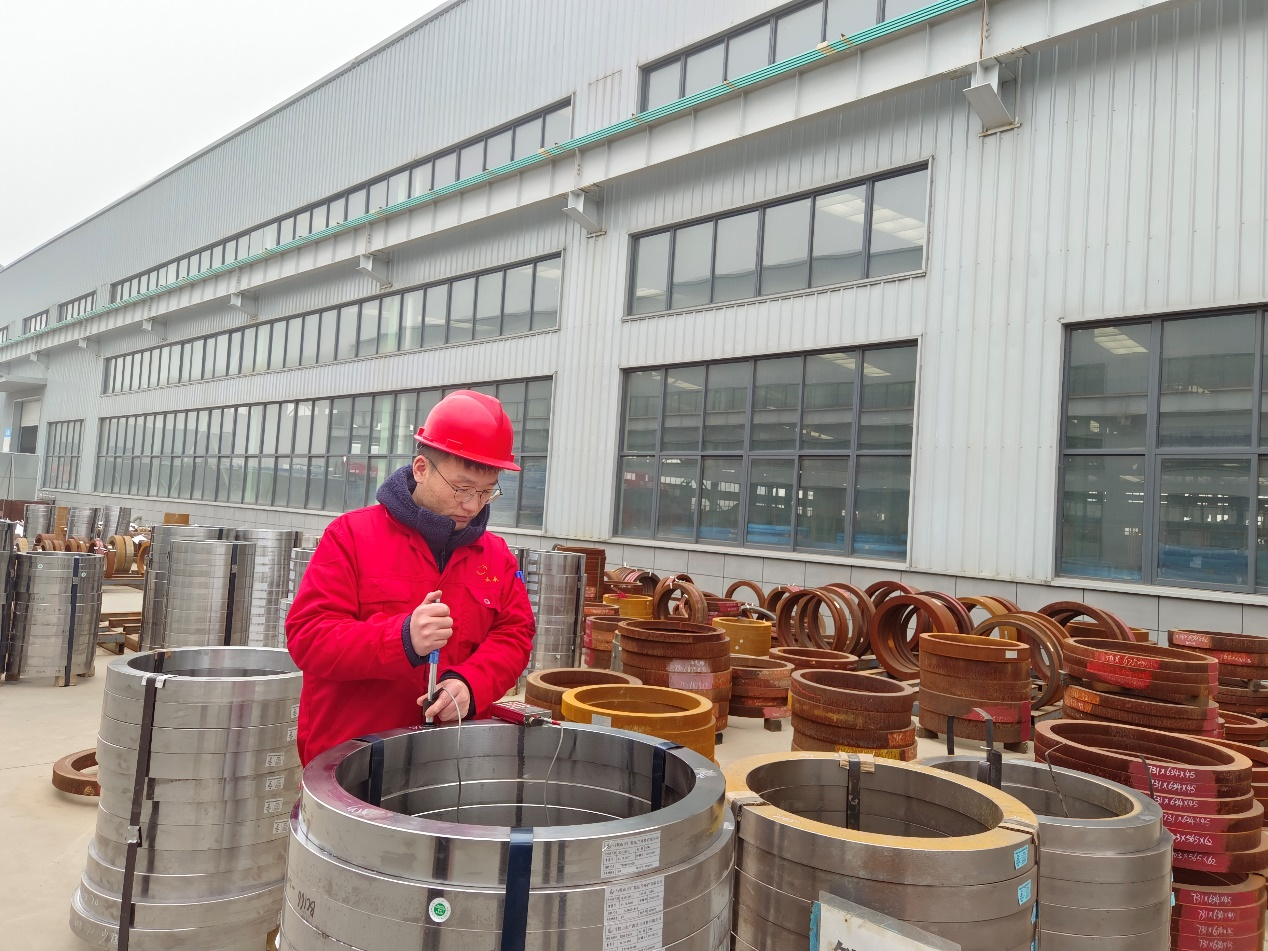
GCr15SiMn: High carbon chromium bearing steel, with a hardness of 60-64HRC, excellent wear resistance, and better wear resistance than GCr15 steel, suitable for high load operation. High carbon content (1.05%) and chromium (1.5%) form hard carbides, with a wear resistance four times that of 20CrMnTi, suitable for wear resistance and fatigue resistance working conditions. Its application fields include engineering machinery, automotive transmission shafts, etc.
20CrMnTi: This type of steel belongs to low-carbon alloy steel, and its surface hardness is usually improved by carburizing and quenching treatment. It can form a high hardness carburizing layer on the tooth surface, while maintaining good toughness and strength in the core. After treatment, the surface hardness can reach 58-64HRC, and the core maintains good toughness and strength, therefore it has good wear resistance, especially suitable for heavy-duty, high-speed or impact working conditions, such as slewing bearings in metallurgy, mining machinery and other fields.
42CrMo: Belonging to medium carbon alloy steel, it often obtains high comprehensive mechanical properties through quenching and tempering treatment (quenching and high-temperature tempering), with moderate wear resistance, suitable for scenarios with moderate loads and no severe impact. However, compared to low-carbon steel treated with carburizing, its surface wear resistance may be lower. The tempering stability and fatigue strength of 42CrMo are also better, with a higher surface hardness, suitable for high wear environments. 42CrMo is more suitable for manufacturing slewing bearings, with good yield strength and hardenability, which can better withstand high loads and impacts, and is suitable for long-term operation of construction machinery. These materials, after quenching or tempering treatment, can ensure stable performance of the teeth during long-term use, and are commonly used as slewing bearings for heavy machinery, large cranes, and other equipment.
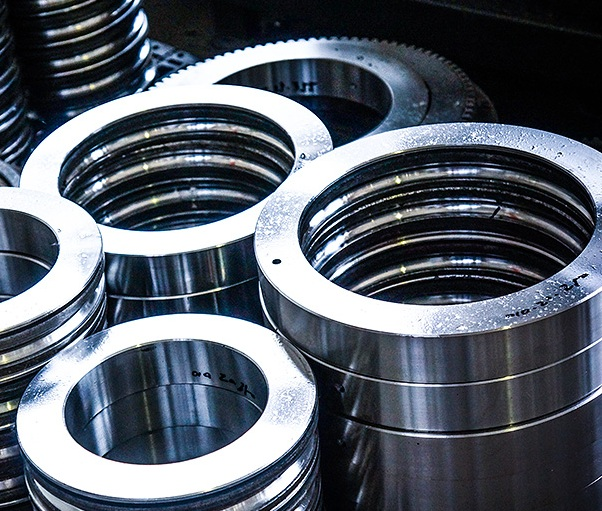
50Mn: This is a type of carbon manganese steel commonly used in applications that require high toughness and impact resistance, but its wear resistance is relatively average and can meet the strength and wear resistance requirements of general slewing bearing teeth. Manganese steel is often subjected to heat treatment (such as quenching) to increase its hardness, but its surface hardness is usually lower than that of 20CrMnTi treated with carburizing, and it may not perform as stably as alloy steel in heavy load wear environments. The tooth surface hardness can reach 50-60HRC, making it suitable for slewing bearings under conventional loads and working conditions.
Wear resistance ranking: Overall, GCr15SiMn has the best wear resistance, while 42CrMo and 20CrMnTi also have good wear resistance after carburizing and quenching. The wear resistance depends on the carburizing layer and is prone to wear after long-term use; The wear resistance of 50Mn is relatively weak. When choosing, specific operating conditions (such as load, speed, impact frequency) and optimization of heat treatment processes should also be considered.
For key components such as slewing bearing teeth, if both wear resistance and impact resistance need to be considered, 42CrMo is more suitable, with balanced strength, toughness, and wear resistance; If you need to balance high toughness and impact resistance, and under normal load working conditions, 50Mn is also a good choice.
In practical applications, the material selection of the slewing bearing teeth needs to comprehensively consider factors such as equipment operating conditions, load size, speed, working environment, and combined with heat treatment technology to ensure that the performance of the teeth meets the design requirements.
If you have any questions about the material of the slewing bearing, please contact Xuzhou Wanda Slewing Bearing Co.,Ltd.
Post time: Apr-14-2026